

Stock: In Stock
SKU: T-1a
Right Dangerous Bend Sign Sign T-1a: Indicates that a right-curving road section is approaching ahea..
370.50 TL + KDV
370.50 TL + KDV
Stock: In Stock
SKU: T-1b
What is Dangerous Left Corner T-1b: Indicates that a road section with a left bend is approaching ah..
370.50 TL + KDV
370.50 TL + KDV
Stock: In Stock
SKU: T-2a
What is a Right Dangerous Continuous Bend T-2a: When seen; ahead, the first one to the right indicat..
370.50 TL + KDV
370.50 TL + KDV
Stock: In Stock
SKU: T-2b
Dangerous Continuing Left Curve Sign T-2b: Indicates that there are consecutive dangerous bends ahea..
370.50 TL + KDV
370.50 TL + KDV
Stock: In Stock
SKU: T-3a
Dangerous Slope Descent Sign T-3a: Indicates downhill or ascending slope road sections that are cons..
370.50 TL + KDV
370.50 TL + KDV
Stock: In Stock
SKU: T-3b
Hazardous Slope Climbing Sign T-3b: Indicates downhill or ascending grade road sections considered t..
370.50 TL + KDV
370.50 TL + KDV
Stock: In Stock
SKU: T-4a
T-4a: It is used to indicate the sections where the road pavement cannot pass side by side without t..
370.50 TL + KDV
370.50 TL + KDV
Stock: In Stock
SKU: T-4b
Right Tapered Paving Board T-4b: It is used to indicate the sections where the road pavement cannot ..
370.50 TL + KDV
370.50 TL + KDV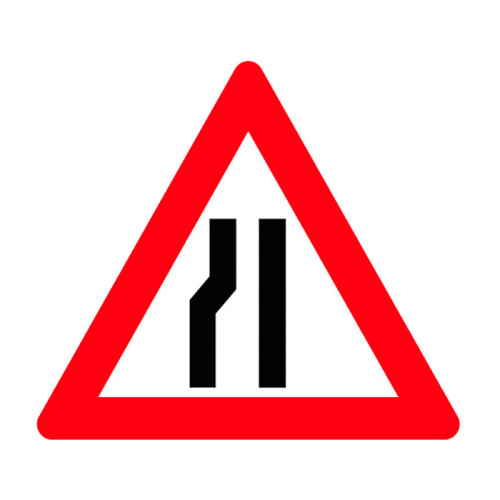
Stock: In Stock
SKU: T-4c
Left Tapered Paving Board T-4c: It is used to indicate the sections where the road pavement cannot p..
370.50 TL + KDV
370.50 TL + KDV
Stock: In Stock
SKU: T-5
Opened Bridge Sign T-5: Indicates that the bridge ahead is opened to sea traffic from time to time. ..
370.50 TL + KDV
370.50 TL + KDV
Stock: In Stock
SKU: T-6
Road Sign Ending by the Sea or River T-6: It warns that the road ends at the sea or river bank and t..
370.50 TL + KDV
370.50 TL + KDV
Stock: In Stock
SKU: T-7
Rough Road Sign Board T-7: It is used to warn that there are trenches, bumps, pits and similar super..
370.50 TL + KDV
370.50 TL + KDV
Stock: In Stock
SKU: T-8
Slippery Road Sign Sign T-8: Warns that the road surface is slippery and informs drivers not to brak..
370.50 TL + KDV
370.50 TL + KDV
Stock: In Stock
SKU: T-9
Loose Material Floor Sign T-9: Indicates that there is loose material on the roadway and stones may ..
370.50 TL + KDV
370.50 TL + KDV
Stock: In Stock
SKU: T-10
Loose Slope Plate T-10: Indicates that stones and rocks may be rolled from the cut slope onto the ca..
370.50 TL + KDV
370.50 TL + KDV
Stock: In Stock
SKU: T-11
Pedestrian Crossing Approach Sign T-11: This sign warns that there is a pedestrian crossing ahead. I..
370.50 TL + KDV
370.50 TL + KDV
Stock: In Stock
SKU: T-12
School Crossing Traffic Sign T-12: It is used to indicate the road sections where children pass freq..
370.50 TL + KDV
370.50 TL + KDV
Stock: In Stock
SKU: T-13
Cycle Passable Traffic Sign T-13: It is used to indicate that the bicycle path is connected to the r..
370.50 TL + KDV
370.50 TL + KDV
Stock: In Stock
SKU: T-14a
T-14a: It is used to indicate that there may be an animal on the road and/or there is a section wher..
370.50 TL + KDV
370.50 TL + KDV
Stock: In Stock
SKU: T-14b
Wild Animals Passable Sign T-14b: It is used to indicate that there may be an animal on the road and..
370.50 TL + KDV
370.50 TL + KDV
Stock: In Stock
SKU: T-15
Road Work Sign Meaning T-15: this sign indicates that there is road work on the road ahead, and the ..
370.50 TL + KDV
370.50 TL + KDV
Stock: In Stock
SKU: T-16
Illuminated Signal Device Sign T-16: Indicates that the intersections controlled by lighted beacons ..
370.50 TL + KDV
370.50 TL + KDV
Stock: In Stock
SKU: T-17
Airport Low Flight Sign T-17: Informs that there may be low-flying aircraft over the highway and hig..
370.50 TL + KDV
370.50 TL + KDV
Stock: In Stock
SKU: T-18
Side Wind Sign T-18: It indicates that the wind blowing perpendicular to the road where the traffic ..
370.50 TL + KDV
370.50 TL + KDV
Stock: In Stock
SKU: T-19
Two-Way Traffic Sign T-19: Indicates that the highway operates in two-way traffic ahead. Speed is re..
370.50 TL + KDV
370.50 TL + KDV
Stock: In Stock
SKU: T-20
Warning Sign T-20: It is used to warn about the existence of one of the other types of dangers other..
370.50 TL + KDV
370.50 TL + KDV
Stock: In Stock
SKU: T-21
Uncontrolled Junction Sign T-21: It is used to notify that an uncontrolled intersection is approachi..
370.50 TL + KDV
370.50 TL + KDV
Stock: In Stock
SKU: T-22a
Main Road Secondary Road Junction Sign T-22a: indicates that a secondary road intersection is approa..
370.50 TL + KDV
370.50 TL + KDV
Stock: In Stock
SKU: T-22b
What is Secondary Road Sign T-22b: Indicates that a secondary road intersection is approaching, traf..
370.50 TL + KDV
370.50 TL + KDV
Stock: In Stock
SKU: T-22c
Secondary Road Sign T-22c: Informs that a secondary road intersection is approaching, traffic on the..
370.50 TL + KDV
370.50 TL + KDV
Stock: In Stock
SKU: T-22d
Main Road Secondary Road Sign T-22d: Indicates that a secondary road intersection is approaching, tr..
370.50 TL + KDV
370.50 TL + KDV
Stock: In Stock
SKU: T-22e
Secondary Road Sign T-22e: Informs that a secondary road junction is approaching, traffic on the roa..
370.50 TL + KDV
370.50 TL + KDV
Stock: In Stock
SKU: T-23a
Right-hand main road entry sign T-23a: It is used to indicate the approaching of access roads of sid..
370.50 TL + KDV
370.50 TL + KDV
Stock: In Stock
SKU: T-23b
Left-hand Main Road Entrance Sign T-23b: It is used to indicate that the access roads of side roads ..
370.50 TL + KDV
370.50 TL + KDV
Stock: In Stock
SKU: T-24
Roundabout Sign T-24: Indicates that there is a roundabout ahead. Speed should be reduced and the fi..
370.50 TL + KDV
370.50 TL + KDV
Stock: In Stock
SKU: T-25
Controlled Railroad Crossing Sign T-25: Indicates that there is a ground crossing controlled by a ba..
370.50 TL + KDV
370.50 TL + KDV
Stock: In Stock
SKU: LT-300
There is a trap sign: It is a warning sign that there is a trap on the road and that the drivers sho..
370.50 TL + KDV
370.50 TL + KDV
Stock: In Stock
SKU: T-37
Hidden Ice Sign T-37: Indicates that unexpected icing may occur on the road. It reports that there m..
370.50 TL + KDV
370.50 TL + KDV
Stock: In Stock
SKU: T-39
Intersection Sign Formed by Tram Line T-39: It can be used to indicate that the road intersects with..
370.50 TL + KDV
370.50 TL + KDV
Stock: In Stock
SKU: T-36
Low Shoulder Sign Board T-36: Used to warn the level difference between pavement and shoulder. This ..
370.50 TL + KDV
370.50 TL + KDV
Stock: In Stock
SKU: T-38
Traffic Congestion Sign T-38: To be used to indicate that there may be a traffic jam ahead on the ro..
370.50 TL + KDV
370.50 TL + KDV
Stock: In Stock
SKU: T-26
Uncontrolled Railroad Crossing Sign T-26: Located on both sides of non-barrier (uncontrolled) railro..
370.50 TL + KDV
370.50 TL + KDV
Stock: In Stock
SKU: T-27a
Uncontrolled Railroad Crossing Single Line Sign T-27a: Indicates that a single-track railroad crossi..
370.50 TL + KDV
370.50 TL + KDV
Stock: In Stock
SKU: T-27b
Uncontrolled Railroad Crossing Double Track Sign T-27b: Located on both sides of non-barrier (uncont..
370.50 TL + KDV
370.50 TL + KDV
Stock: In Stock
SKU: T-28b
Level Crossing Sign T-28b: It is used to increase the visibility of the warning signs. It gives info..
533 TL + KDV
533 TL + KDV
Stock: In Stock
SKU: T-28a
Level Crossing Sign T-28a:: It is used to increase the visibility of the warning signs. It gives inf..
533 TL + KDV
533 TL + KDV
Stock: In Stock
SKU: T-29a
Railway Level Crossing Approach Sign T-29a: It is used to increase the visibility of the warning sig..
533 TL + KDV
533 TL + KDV
Stock: In Stock
SKU: T-29b
Level Crossing Sign T-29b: It is used to increase the visibility of warning signs. It gives informat..
533 TL + KDV
533 TL + KDV