Car Park Wall Protection: Protect the Wall and the Vehicle
Wall protection is the general name for the profiles and panels fitted at the height where vehicles touch the wall in car parks, warehouses and factories. When a car bumper, an opening door, a forklift or a pallet truck meets the wall, the impact lands on the guard and not on the wall. Plaster and paint stay intact, and scratches and dents on the vehicle are reduced. This category holds rubber profiles fitted along the wall, reflective panels with direction arrows, and their end caps.
Types of Wall Protection
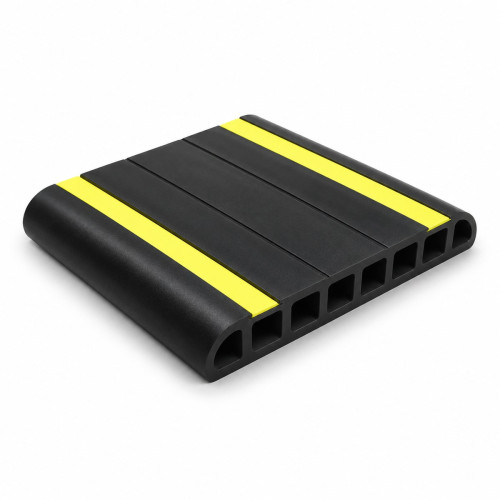
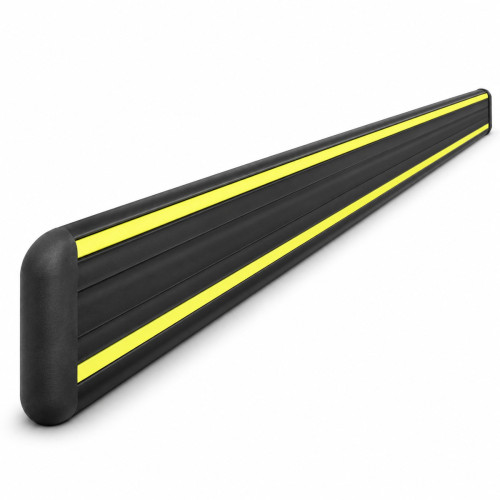
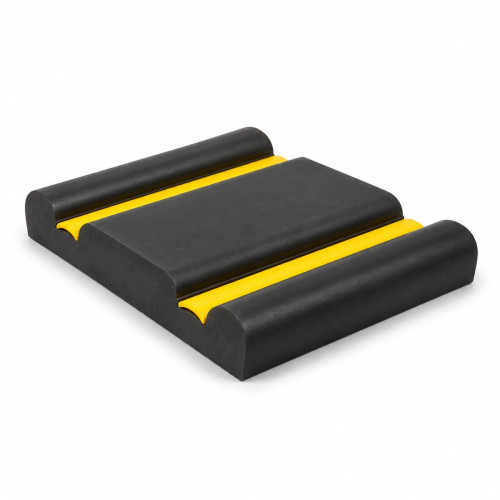
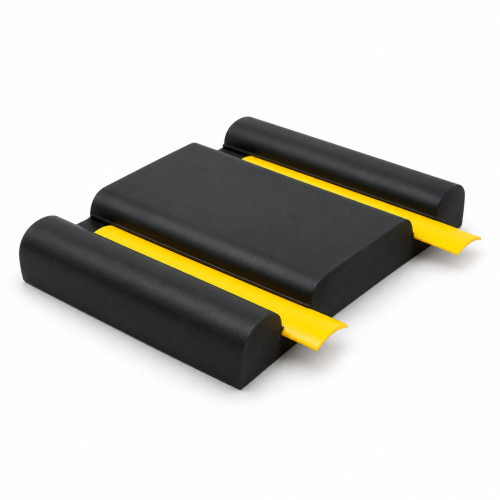
- Rubber wall guard profile: a hollow EPDM profile, 3 metres long and 15 cm high. It is cut to the wall length, and on longer walls the pieces are fitted end to end. The screw heads stay hidden under the yellow strips.
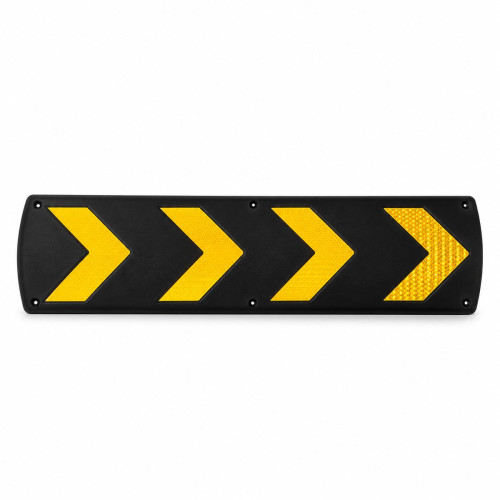
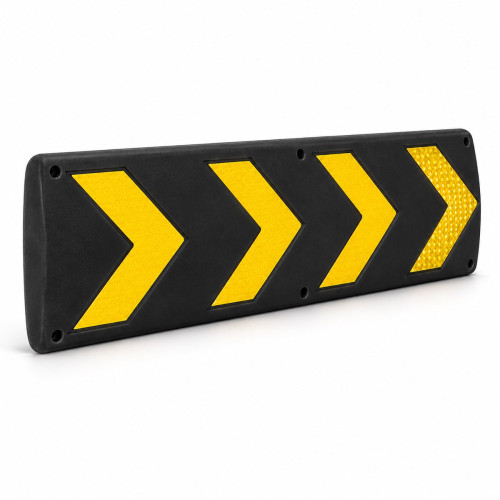
- Wall guard panel with direction arrows: an 80 × 22 cm rubber panel with four reflective arrows. On ramps and bends it protects the wall and shows drivers which way to go; panels are fitted side by side.
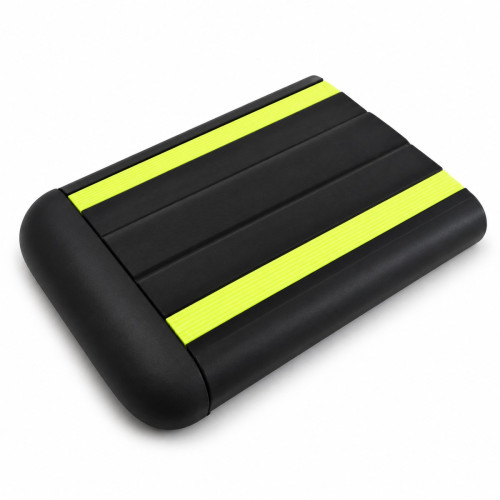
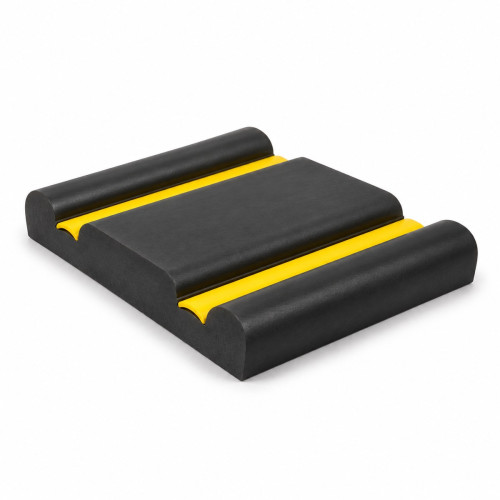
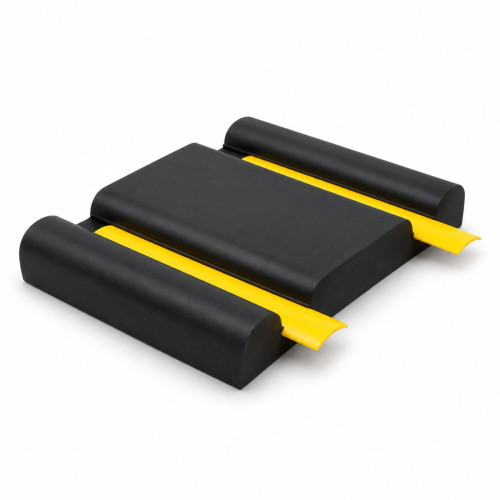
- TPE wall protection system (20 cm and 15 cm): a 3 metre TPE profile with two yellow warning strips; the screws stay hidden under the strips and the profile can be cut on site. The 20 cm wide, 2.5 cm thick model takes car door and forklift contact; the 15 cm wide, 2 cm thick model takes up little room in narrow passages such as hospital and hotel corridors.
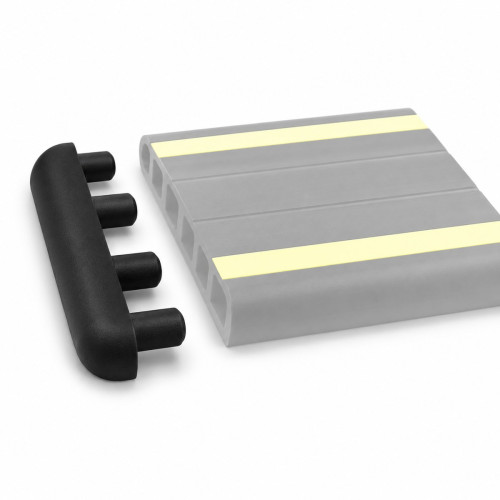
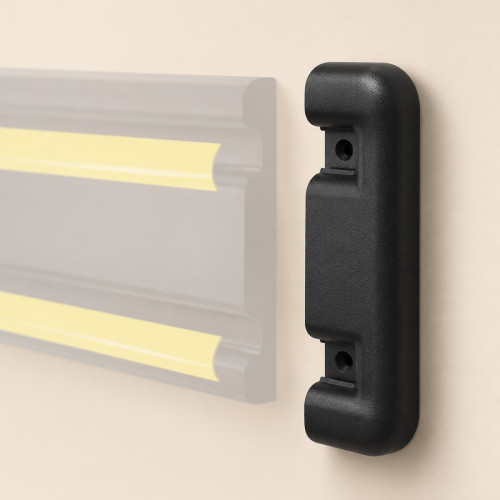
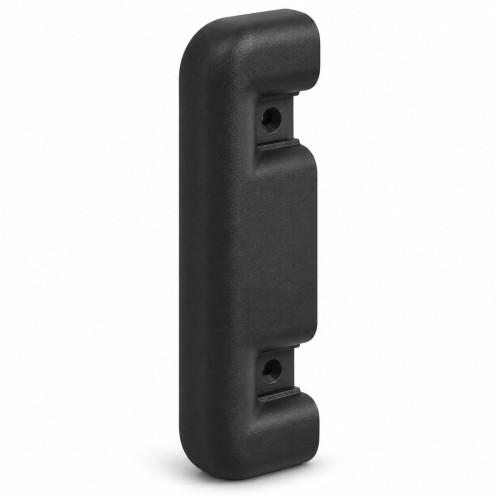
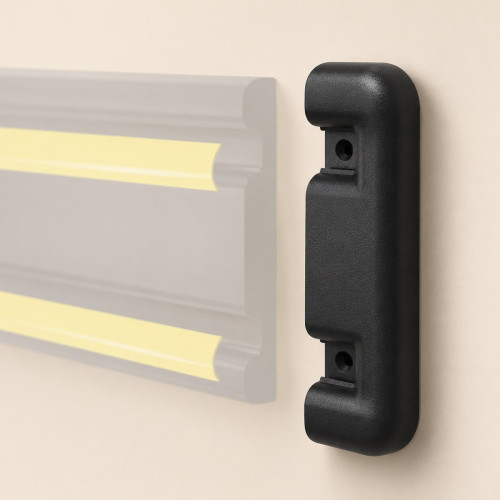
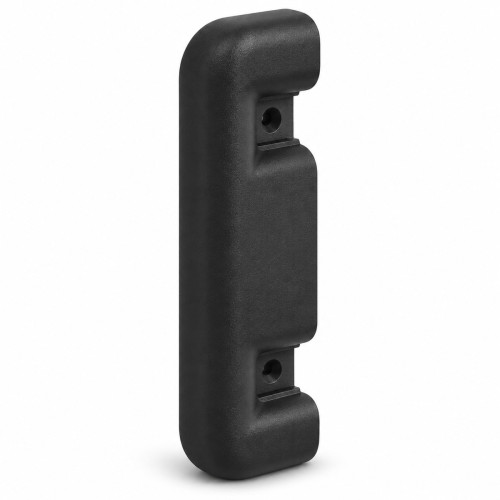
- End caps: close the open or cut ends of the profile and keep out dust and dirt. There are separate caps for the 15 cm rubber profile, the 20 cm TPE profile and the 15 cm TPE profile; each cap only fits a profile of its own width. Each line takes 2 caps, one per end.
What to Check When Choosing
- Contact height: a car bumper and a forklift or pallet truck touch the wall at different heights. Bring the vehicle up to the wall and mark where it touches; the guard goes at that height.
- Wall length: measure the wall and divide by the product length. An 8 metre wall takes 10 of the 80 cm panels or 3 of the 3 metre profiles; the last piece is cut to fit.
- Visibility: in dim indoor car parks and on ramps used at night, panels with reflective arrows return headlight beams so the wall can be seen from a distance. The yellow-striped profile makes the wall stand out in lit areas.
- Location: a continuous profile suits straight parking walls; panels with direction arrows suit ramps and bends.
- Mounting surface: the products are fixed to concrete and brick walls with dowels and screws. Repair crumbling plaster before fitting.
Rubber or Steel?
Rubber guards flex to take the impact; on car park walls where cars manoeuvre slowly they also reduce the risk of damage to the vehicle. In warehouses and factories with forklift and heavy load traffic, steel barriers fixed to the floor in front of the wall are used. We manufacture steel barriers in our own factory; you can find them in the Iron Parking Barriers and Shelf and Area Protection Barriers categories. For column and wall corners, see the Column Corner Protectors category.
How Is It Installed?
Hold the guard against the wall, mark the screw points and drill the dowel holes; then fix the product with dowels and screws. On the profile the screws go in under the yellow strips, and once the strips are back the screw heads are hidden. The panel uses its ready-made mounting holes. Finally, end caps are fitted to the open ends of the profile.
Frequently Asked Questions
Can the wall guard profile be cut? Yes. The 3 metre rubber profile is cut to the wall length, and an end cap is fitted to the cut end.
Do end caps come with the profile? No, caps are sold separately. Order 2 caps for the two ends of each profile piece.
Can it be used outdoors? The rubber profile and the panel with direction arrows are used indoors and outdoors; they are also fitted to open car park walls and ramps.
Can I get a price for bulk orders? Yes. Send us the wall length and the product you want and ask for a quote.